
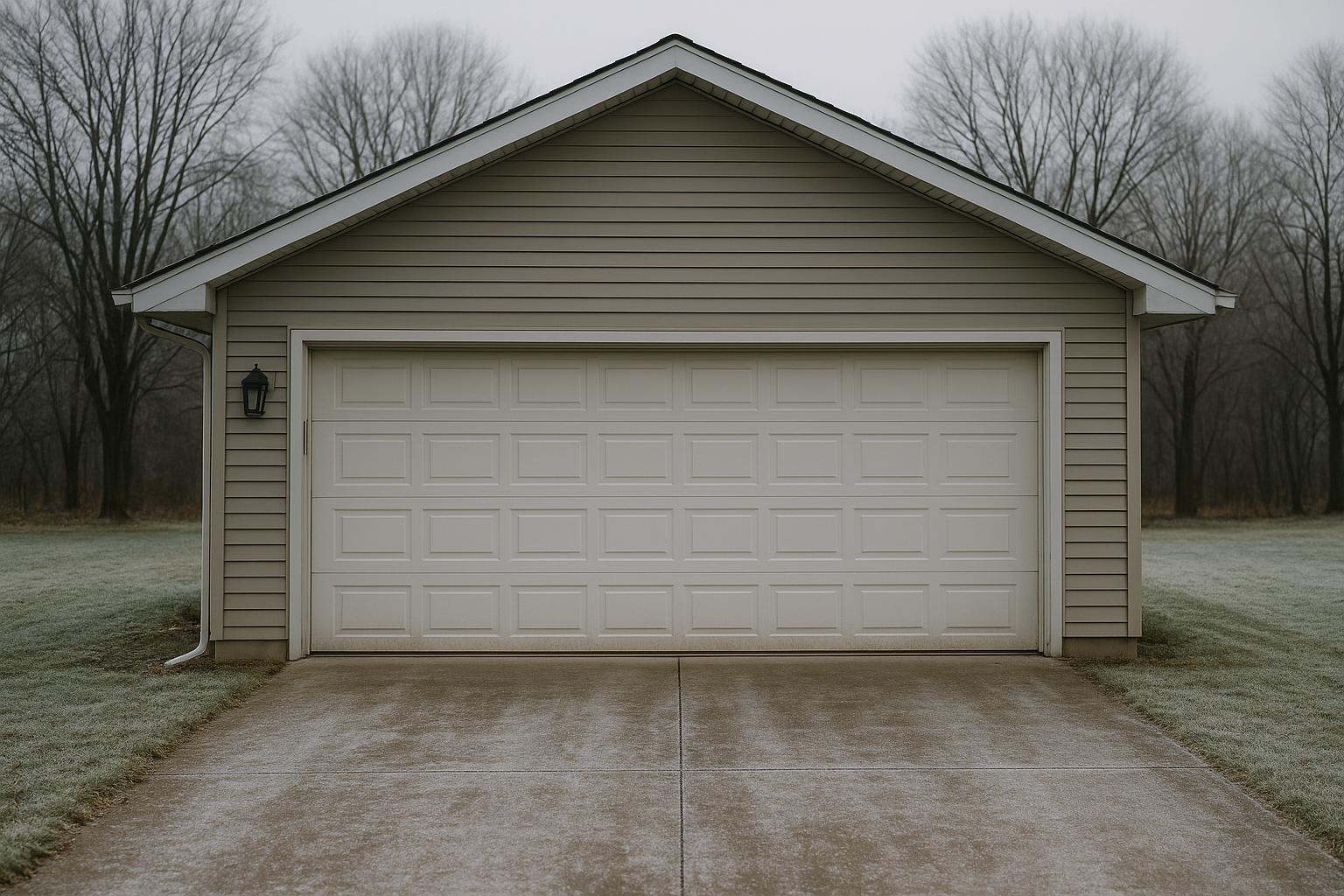
Why Cold Weather and Garage Doors Don't Always Get Along
If you've ever walked out on a frigid Gaithersburg morning, pressed your garage door opener, and heard the motor strain while the door refuses to budge, you're not alone. Cold weather is one of the most common — and most frustrating — reasons garage doors stop working properly.
Maryland winters bring freezing rain, ice, and temperatures that can dip well below freezing for days at a time. Your garage door is the largest moving part of your home, and all that cold puts stress on its mechanical components in ways you might not expect. The good news is that most cold-weather garage door problems are preventable, and many can be resolved without a full replacement.
Here's what's really going on when your garage door won't cooperate in the cold, and what you can do about it.
The Most Common Cold-Weather Garage Door Problems
1. The Weatherstripping Is Frozen to the Ground
This is the number one reason garage doors get stuck in winter. The rubber weatherstripping along the bottom of your door is designed to create a seal against drafts, moisture, and pests. But when water collects under that seal and temperatures drop overnight, the rubber literally freezes to the concrete floor.
If your opener is straining against a frozen seal, do not keep pressing the button. Forcing the door open can tear the weatherstripping right off, damage the opener's motor, or strip the gears inside the unit.
What to do instead:
- Gently tap along the bottom of the door with a rubber mallet or the sole of your boot to break the ice seal.
- Use a heat gun or hair dryer on a low setting to carefully melt the ice along the bottom edge.
- Pour lukewarm (never boiling) water along the seal to loosen it.
- Once free, dry the area and apply a silicone-based lubricant to the weatherstripping to help prevent it from freezing again.
2. Metal Parts Contract in the Cold
Steel and aluminum contract when temperatures drop. This means the tracks, springs, hinges, and other metal components of your garage door system can tighten up, creating more friction and resistance. You might notice the door moves more slowly than usual, jerks during operation, or sounds different than it does in warmer months.
Regular lubrication is the best defense here. A silicone-based or lithium-based garage door lubricant applied to the tracks, rollers, hinges, and springs can keep things moving smoothly even when temperatures plummet. Avoid using WD-40 as a long-term lubricant — it's a solvent, not a true lubricant, and it can actually attract dirt and grime over time.
3. The Garage Door Springs Have Lost Tension
Garage door springs are under enormous tension, and cold weather causes the metal to become more brittle and less flexible. Springs that were already nearing the end of their lifespan are especially vulnerable to snapping in cold weather. If your door feels unusually heavy when you try to lift it manually, or if it won't stay open on its own, your springs may be losing tension.
Spring repair and replacement is not a DIY job. These components are under life-threatening amounts of tension. If you suspect a spring issue, call a professional right away.
4. Your Opener's Batteries Are Dead or Weak
This one sounds obvious, but it catches people off guard every winter. Cold temperatures drain batteries faster — including the battery in your garage door remote and the backup battery in your opener unit. Before assuming something mechanical is wrong, try replacing the batteries in your remote. It's a two-minute fix that solves the problem more often than you'd think.
5. Hardened or Thickened Grease on the Tracks
If your garage door tracks were lubricated with a heavy grease rather than a proper garage door lubricant, that grease can thicken and harden in cold weather, essentially gluing the rollers in place. This creates drag and can prevent the door from opening or closing properly.
A professional maintenance visit includes cleaning old grease from the tracks and applying the correct lubricant — one that stays effective across a wide temperature range.
How to Winterize Your Garage Door Before the Cold Hits
Prevention is always easier and cheaper than emergency repairs. Here are the steps Gaithersburg homeowners should take each fall to prepare their garage door for winter:
- Inspect and replace worn weatherstripping. If the rubber seal along the bottom or sides of your door is cracked, brittle, or pulling away, replace it before freezing temperatures arrive.
- Lubricate all moving parts. Apply a silicone-based lubricant to springs, hinges, rollers, and tracks. Do this at least twice a year — once in fall and once in spring.
- Test the door's balance. Disconnect the opener and lift the door manually to about waist height. If it stays in place, the balance is fine. If it slides down or shoots up, the springs need adjustment.
- Check the opener's force settings. Cold weather may require a slight increase in the opener's force setting to compensate for added resistance. Your owner's manual will show you how to adjust this, but be careful not to set it too high — the safety reverse feature needs to function properly.
- Clear the area around the bottom seal. Keep the threshold clean and dry. Sweep away leaves, dirt, and debris that can trap moisture and contribute to freezing.
- Schedule a professional maintenance visit. A trained technician can spot problems you might miss — worn cables, rusting hardware, misaligned tracks — and address them before they become expensive emergencies.
When to Call a Professional
Some cold-weather issues are simple fixes you can handle yourself. Replacing remote batteries, applying lubricant, and breaking a minor ice seal are all reasonable DIY tasks. But there are situations where calling a professional is the smart and safe choice:
- The door won't open at all, even after troubleshooting
- You hear a loud bang from the garage — this likely means a spring has snapped
- The door is visibly off-track or hanging at an angle
- The opener motor runs but the door doesn't move
- You notice frayed or damaged cables
Attempting to fix springs, cables, or track alignment without the right tools and training can result in serious injury. These are high-tension systems that require professional expertise.
Don't Let Winter Catch You Off Guard
Your garage door works hard year-round, but winter in Gaithersburg puts it to the test. A little preventive maintenance in the fall can save you from standing in your driveway on the coldest morning of the year, wondering why your door won't budge.
At Gaithersburg Garage Door Service, we help homeowners across Gaithersburg, Rockville, Germantown, and the surrounding areas keep their garage doors running reliably through every season. Whether you need a quick tune-up, a weatherstripping replacement, or emergency repair on a broken spring, we show up on time and get it done right.
Give us a call before the next cold snap — your future self will thank you.