
Your Garage Door Shouldn't Sound Like That
You press the button, and instead of a smooth, quiet operation, your garage door groans, squeals, or rattles its way up the track. If this sounds familiar, you're not alone. Noisy garage doors are one of the most common complaints we hear from homeowners in Gaithersburg, and while some sounds are harmless, others are early warning signs of a serious problem.
The good news is that most garage door noises can be diagnosed and fixed before they turn into expensive repairs — or a door that stops working altogether. Let's walk through the most common sounds, what causes them, and what you should do about each one.
Grinding or Scraping Sounds
A grinding or scraping noise usually means metal is rubbing against metal somewhere it shouldn't be. The most common culprits include:
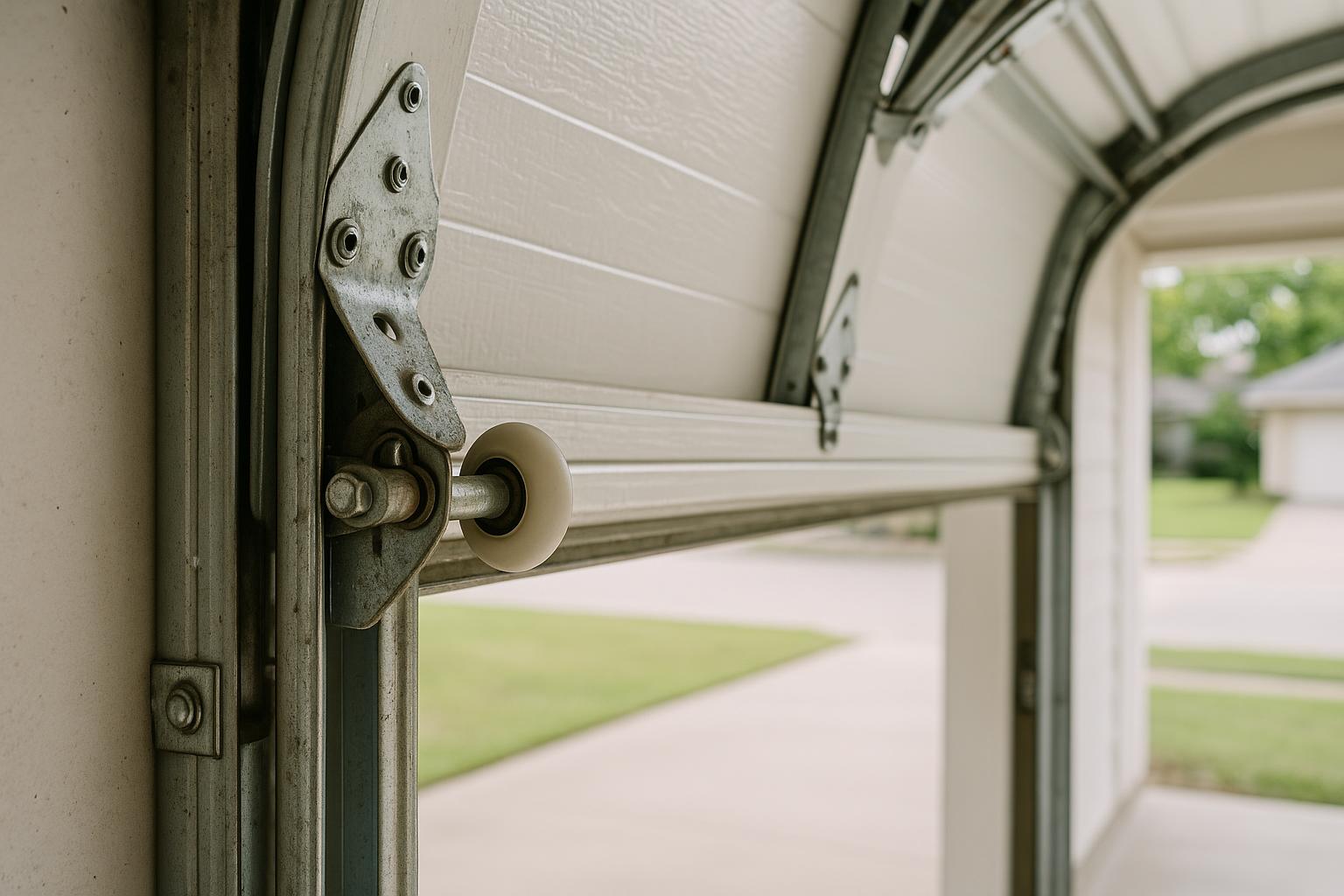
- Worn rollers: Steel rollers wear down over time and can grind against the track. If your rollers are original to the door and more than five to seven years old, they're likely overdue for replacement. Nylon rollers are a popular upgrade because they run much more quietly.
- Misaligned tracks: If the vertical or horizontal tracks have shifted even slightly, the door panels can scrape against them as they move. This creates an unpleasant grinding sound and, if left unchecked, can cause the door to bind or jump off the track entirely.
- Dry bearings: The bearings in your rollers, hinges, and spring system need periodic lubrication. Without it, metal-on-metal friction creates that harsh grinding you're hearing.
If you notice grinding, it's worth having a technician inspect your tracks and rollers sooner rather than later. A small alignment issue today can become a much bigger headache tomorrow.
Squealing or Squeaking Sounds
High-pitched squealing is almost always a lubrication issue. Your garage door has dozens of moving parts — rollers, hinges, springs, bearings, and the opener chain or screw drive — and all of them need to stay properly lubricated to function quietly.
Here's a quick maintenance tip: apply a garage door-specific lubricant (not WD-40, which is a solvent, not a lubricant) to the rollers, hinges, springs, and bearing plates every six months. Many Gaithersburg homeowners find that this simple step eliminates squeaking entirely.
However, if lubrication doesn't solve the problem, the squealing could indicate:
- Worn torsion spring coils rubbing against each other
- A fraying cable sliding through a pulley
- Bent or damaged hinges that are flexing under stress
These are repairs best left to a professional, especially anything involving the springs or cables, which are under extreme tension.
Rattling or Vibrating Sounds
Rattling is one of the more common — and often easiest to fix — garage door noises. It typically means something has come loose. Over thousands of open-and-close cycles, nuts, bolts, and screws naturally loosen due to vibration.
Start by checking:
- Track mounting brackets: These secure the track to the wall and ceiling. Loose brackets allow the track to vibrate with every cycle.
- Opener mounting hardware: If your garage door opener is rattling, the bolts connecting it to the ceiling bracket may need tightening.
- Hinges and roller brackets: These connect the door panels and hold the rollers in place. A loose hinge can create a surprising amount of noise.
- The chain on your opener: A chain-drive opener that's too loose will slap and rattle during operation. It may need adjustment or, if the opener is aging, replacement.
A basic socket wrench can tighten most of these components, but be careful not to overtighten — you can strip the holes in the door panels or warp the tracks.
Banging or Popping Sounds
This is the noise that tends to alarm people the most, and for good reason. A loud bang or pop during operation can indicate:
- Torsion spring issues: If a spring is nearing the end of its life, it can make popping sounds as the coils shift under load. A sudden, gunshot-like bang while the door is stationary usually means a spring has broken — a situation that requires immediate professional attention.
- Panel problems: Warped or damaged panels can pop as they flex through the curved section of the track. This is especially common with older wooden garage doors that have absorbed moisture over the years.
- Opener gear problems: A stripped or worn gear inside the opener unit can create a banging or clunking sound, particularly when the door changes direction.
If you hear a sudden loud bang from your garage, do not attempt to operate the door. A broken spring makes the door extremely heavy and potentially dangerous to move manually.
Humming but Not Moving
If your garage door opener hums or buzzes when you press the button but the door doesn't move, the motor is engaging but can't drive the door. Common causes include:
- A stripped opener gear: The plastic drive gear inside many openers wears down over time and eventually can't turn the chain or belt.
- A broken spring: Without functioning springs to counterbalance the door's weight, the opener motor simply isn't powerful enough to lift it.
- The manual release is engaged: Check whether the red emergency release cord has been pulled, disconnecting the door from the opener carriage.
This is a situation where a quick diagnosis from a trained technician can save you from replacing parts you don't actually need.
When to DIY and When to Call a Pro
Some garage door maintenance is perfectly safe for homeowners to handle on their own:
- Lubricating rollers, hinges, springs, and bearings every six months
- Tightening loose nuts and bolts on tracks, brackets, and hinges
- Visually inspecting cables, springs, and rollers for obvious wear
However, you should call a professional for anything involving:
- Spring replacement or adjustment
- Cable repair or replacement
- Track realignment
- Opener motor or gear repair
- Any situation where the door feels unusually heavy or won't stay open
Garage door springs and cables are under hundreds of pounds of tension. Attempting to repair them without proper training and tools can result in serious injury.
Keep Your Garage Door Running Quietly in Gaithersburg
A noisy garage door isn't just annoying — it's often your first clue that something needs attention. Catching these issues early with routine maintenance can extend the life of your door and opener by years, saving you money and preventing inconvenient breakdowns.
At Gaithersburg Garage Door Service, we help homeowners and businesses across Gaithersburg, Rockville, Germantown, and the surrounding areas keep their garage doors running smoothly and quietly. Whether you need a quick tune-up or a full diagnostic, we'll show up on time, explain exactly what we find, and give you honest recommendations — no pressure, no unnecessary upsells.
If your garage door has been making sounds that don't seem right, don't wait for the problem to get worse. Give us a call and let's get it taken care of.