
Your Garage Door Springs Are Doing More Work Than You Think
Every time you open or close your garage door, a set of heavy-duty springs does the real heavy lifting. Your garage door likely weighs between 130 and 250 pounds — sometimes more for oversized or insulated doors — and those springs are responsible for counterbalancing all of that weight. The opener motor just guides the process; the springs provide the muscle.
Given how hard they work, it's no surprise that springs are one of the most common garage door components to fail. And when they do, the results can be dramatic — a loud bang, a door that won't open, or worse, a safety hazard for your family. Here in Gaithersburg, where temperature swings between summer and winter put extra stress on metal components, understanding your springs' lifespan is especially important.
How Long Do Garage Door Springs Actually Last?
Most standard garage door springs are rated for approximately 10,000 cycles. One cycle equals one full open and one full close. That sounds like a lot, but consider how quickly those cycles add up:
- If you open and close your garage door 4 times a day, that's roughly 1,460 cycles per year.
- At that rate, standard springs will last about 7 to 9 years.
- Families that use the garage as their primary entrance — which is extremely common in Gaithersburg neighborhoods like Kentlands, Lakelands, and the older communities near downtown — may cycle their door 6 to 8 times daily, cutting the lifespan to 4 to 5 years.
High-cycle springs, rated for 25,000 or even 50,000 cycles, are available and can last significantly longer. If you're replacing springs anyway, upgrading to high-cycle options is often worth the modest additional cost.
Torsion Springs vs. Extension Springs: Does It Matter?
There are two main types of garage door springs, and each has different characteristics when it comes to replacement:
Torsion Springs
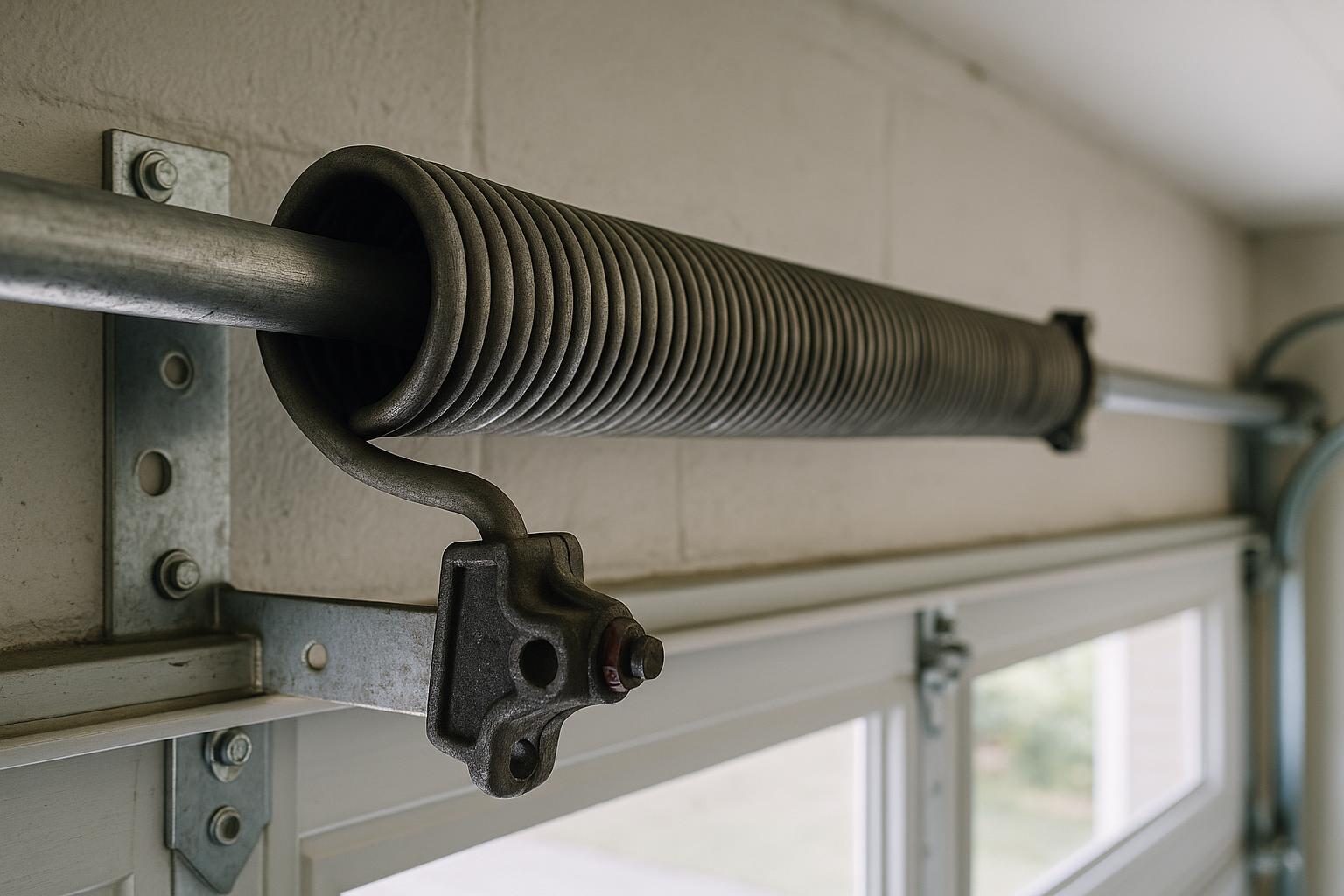
These are mounted on a metal shaft directly above the garage door opening. They twist and unwind to raise and lower the door. Torsion springs are the more common and generally preferred type for residential doors because they provide smoother, more controlled movement. Most modern homes in the Gaithersburg and Rockville area use torsion spring systems.
Extension Springs
These run along the horizontal tracks on either side of the door and stretch to store energy. Extension springs are typically found on older garage door systems or lighter single-car doors. They tend to wear out faster and can be more dangerous when they break if safety cables aren't installed.
Regardless of the type, both need periodic inspection and eventual replacement. Neither lasts forever.
Warning Signs Your Springs Are Wearing Out
Springs rarely fail without giving some warning signs first. Knowing what to look for can help you schedule a replacement before a sudden break leaves you stuck — or puts someone at risk.
- The door feels heavier than usual. If your garage door seems harder to lift manually, the springs may be losing tension.
- The door doesn't stay open. A properly balanced door should stay in place when you lift it halfway and let go. If it slides down, the springs are weakening.
- Visible gaps in the spring coils. Torsion springs that are nearing failure often show a visible gap or separation in the coils.
- The door opens unevenly. If one side rises faster than the other, one of your springs may be more worn than its partner.
- Loud squeaking or groaning. While some noise is normal, excessive squeaking can indicate that springs are dry, corroded, or fatigued.
- The opener struggles or stops mid-cycle. Your opener motor isn't designed to lift the full weight of the door. If the springs aren't doing their job, the opener has to work harder, which can burn out the motor prematurely.
What Happens When a Spring Breaks?
A broken garage door spring is one of the most common emergency calls we get from homeowners across Gaithersburg, Germantown, and North Potomac. Here's what typically happens:
- You hear a loud bang from the garage — many people mistake it for something falling or even a break-in.
- The garage door won't open, or it opens only a few inches before stopping.
- If the door was open when the spring broke, it may slam shut with significant force.
This is why we always recommend proactive replacement rather than waiting for a break. A controlled, scheduled replacement is safer, less stressful, and often less expensive than an emergency repair.
Can You Replace Garage Door Springs Yourself?
We'll be straightforward: garage door spring replacement is one of the most dangerous DIY home repairs you can attempt. Torsion springs are under extreme tension. If they're unwound incorrectly, they can cause serious injury. Every year, emergency rooms across the country treat people who were hurt attempting DIY spring replacement.
Professional technicians have the specialized tools, training, and experience to replace springs safely. The job typically takes less than an hour for a trained professional, and the peace of mind is well worth the service call.
How to Make Your Springs Last Longer
While you can't prevent springs from eventually wearing out, you can extend their lifespan with some basic maintenance:
- Lubricate the springs twice a year. Use a silicone-based or lithium-based garage door lubricant. This reduces friction and helps prevent rust — particularly important in our area where humidity and winter road salt can accelerate corrosion.
- Schedule annual maintenance inspections. A professional can check spring tension, balance, and overall condition during a routine tune-up. Small adjustments now can prevent big problems later.
- Keep the door balanced. An unbalanced door puts uneven stress on springs, causing one to wear faster than the other. If you notice your door sitting crooked when closed, call for a balance adjustment.
- Consider high-cycle springs. When it's time for replacement, ask about upgrading. High-cycle springs cost a bit more upfront but can last two to three times longer than standard springs.
When Should You Call a Professional?
If you've noticed any of the warning signs listed above, or if your springs are approaching the 7-to-10-year mark, it's time to have them inspected. Don't wait for the loud bang at 6 a.m. on a Monday morning when you need to get to work.
At Gaithersburg Garage Door Service, we inspect your springs, assess their remaining life, and give you an honest recommendation. If they've still got life left, we'll tell you. If they need replacing, we'll explain your options — including high-cycle upgrades — and handle the job safely and efficiently.
We serve homeowners and businesses throughout Gaithersburg, Rockville, Germantown, Potomac, North Potomac, and Derwood. Whether your springs just broke or you want to stay ahead of the problem, give us a call. We show up on time, explain everything in plain English, and get it done right the first time.